Meditation Teachers Instruction Crossword Clue: A Comprehensive Plan
This plan delves into the “Meditation teachers instruction” crossword clue, revealing “EXHALE” as the solution. We’ll explore its appearance in puzzles like USA Today’s, analyze variations, and discuss letter counts.
Furthermore, we’ll examine NY Times frequency, related answers like “YOGIS”, and the concept of exhalation within diverse meditation techniques, offering a complete understanding.
Understanding the Clue & Initial Findings
The crossword clue “Meditation teachers instruction” immediately suggests a directive commonly given during guided meditation sessions. Initial brainstorming centers around words associated with breath control, calmness, and focused attention – core elements of meditative practices. Considering the six-letter constraint, as indicated by solvers online, narrows the possibilities considerably.
Early searches reveal a strong consensus among crossword solvers: the answer is “EXHALE”. This finding is corroborated by multiple sources, including reports of the clue appearing in the USA Today Crossword on January 18, 2024. The simplicity of the clue belies the depth of the concept it represents. Meditation teachers frequently instruct students to exhale fully to release tension and center themselves.
Further investigation shows that the clue isn’t overly complex, fitting within the typical style of general-knowledge crosswords. The phrasing – “instruction” – is key, pointing towards a verb or command. Initial findings strongly support “EXHALE” as the correct and most logical solution, prompting a deeper dive into its relevance within various meditation traditions.
The Answer: “EXHALE” ⎼ Detailed Analysis
“EXHALE”, as the solution to “Meditation teachers instruction,” is remarkably fitting. The act of exhaling is fundamental to nearly all forms of meditation, serving as a focal point for attention and a tool for relaxation. It’s a direct, actionable command a teacher would likely use to guide students into a deeper state of awareness. The word itself is concise, satisfying the six-letter requirement consistently reported by crossword solvers.
Linguistically, “exhale” perfectly encapsulates the physical action central to many meditative techniques. It’s not merely about breathing; it’s about consciously releasing, letting go of tension, and creating space within the body and mind. The instruction to exhale often precedes other guidance, such as focusing on the breath or visualizing calming imagery.
Considering the context of a crossword puzzle, “EXHALE” is a relatively common word, making it accessible to a broad range of solvers. Its simplicity doesn’t diminish its significance within the realm of meditation, but rather highlights the power of a single, deliberate breath. The answer is both accurate and elegantly aligned with the clue’s intent.
Crossword Puzzle Context: USA Today & Other Sources
The “Meditation teachers instruction” crossword clue, with “EXHALE” as the answer, gained prominence following its appearance in the USA Today crossword on January 18, 2024. This specific instance sparked online discussion among crossword enthusiasts seeking solutions and explanations. Numerous crossword solver websites quickly indexed the clue and answer, contributing to its wider recognition.
Beyond USA Today, the clue’s potential for inclusion in other major crossword publications – such as the New York Times, the Daily Celebrity, the Telegraph, and the LA Times – is significant. Crossword compilers frequently repurpose clues with slight variations, adapting them to fit specific puzzle themes and difficulty levels. The universality of meditation as a practice increases the likelihood of this clue reappearing.
Online resources dedicated to crossword puzzle solving consistently list “EXHALE” as the correct answer, often accompanied by user comments and discussions. These platforms serve as valuable tools for solvers encountering the clue in different contexts. The clue’s relatively straightforward nature makes it suitable for a range of puzzle difficulties, further broadening its potential reach.
Clue Variations: “Meditation Teachers” & Related Terms
While “Meditation teachers instruction” is a specific formulation, several variations of this crossword clue exist, all pointing towards “EXHALE” as the solution. A simpler version, “Meditation teachers,” frequently appears, often with “YOGIS” as an alternative answer, though less directly linked to instruction. The core concept revolves around the guidance provided during meditation sessions.
Related terms used in similar clues include “Mindfulness guides,” “Zen masters’ advice,” or “Breathwork prompts.” These variations maintain the connection to the act of instructing or directing meditative practice. The emphasis consistently falls on a verbal cue given by a teacher to facilitate the meditative state. Compilers might employ synonyms for “instruction” like “direction,” “guidance,” or “prompt.”
Furthermore, clues focusing on the physiological aspect of meditation, such as “Breath control cue” or “Relaxation technique signal,” could also lead to “EXHALE.” The key is the association with a deliberate action prompted by a teacher to deepen the meditative experience. The flexibility in phrasing allows for creative clue construction while maintaining a consistent answer.
Letter Count & Common Crossword Lengths (5-6 Letters)
The crossword clue “Meditation teachers instruction” typically yields a solution with 5 or 6 letters, a common length for crossword answers. This constraint significantly narrows down the possibilities, guiding solvers towards likely candidates. The answer, “EXHALE,” perfectly fits this length requirement, making it a strong contender from the outset. Crossword puzzle constructors often favor words within this range for accessibility and puzzle flow.
Five-letter words are prevalent in many crossword grids due to their versatility and ease of integration. Six-letter words offer slightly more complexity while remaining manageable for solvers. The prevalence of these lengths is a direct result of balancing challenge and solvability. Considering the theme of meditation and instruction, shorter, action-oriented words like “EXHALE” are particularly suitable.

The limited letter count encourages concise and direct answers, aligning with the nature of a teacher’s instruction during meditation. Alternatives with different lengths would be unlikely to fit the grid and thematic context. Therefore, the 5-6 letter constraint is a crucial factor in identifying “EXHALE” as the correct solution.
NY Times Crossword & Solution Frequency
While the clue “Meditation teachers instruction” hasn’t been a frequent flyer in the New York Times Crossword, its appearance signals a growing trend of wellness-related themes. The solution, “EXHALE,” isn’t a consistently recurring answer either, suggesting a deliberate choice by the puzzle constructors to introduce fresh vocabulary. Tracking solution frequency reveals patterns in crossword design, indicating a move towards more contemporary and culturally relevant clues.
The NY Times Crossword is renowned for its difficulty and sophisticated wordplay. Therefore, when a relatively straightforward clue like this appears, it often serves as an entry point for less experienced solvers. The absence of frequent repetition for this specific clue suggests it’s not a staple in their puzzle database. However, related terms like “YOGIS” or breath-focused words appear more regularly.
Analyzing past puzzles indicates that the NY Times favors nuanced and indirect clues. The directness of “Meditation teachers instruction” might indicate a deliberate attempt to broaden appeal or introduce a wellness theme. Future occurrences will be valuable in establishing a pattern for this type of clue and solution.
YOGIS as a Related Crossword Answer
The term “YOGIS” frequently surfaces in crossword puzzles as a synonym for meditation teachers, representing a direct thematic link to the “Meditation teachers instruction” clue. Unlike “EXHALE,” which focuses on a specific instruction, “YOGIS” identifies the practitioners themselves, offering a broader association with the practice of meditation. This connection highlights the multifaceted nature of the topic within crossword construction.
Crossword puzzle creators often utilize related terms to create a network of interconnected clues, enhancing the solver’s experience. “YOGIS” serves as a foundational answer, frequently appearing alongside clues referencing poses, philosophies, or related spiritual concepts. Its higher frequency compared to “EXHALE” demonstrates its established presence in crossword lexicons.
The relationship between “YOGIS” and “EXHALE” illustrates how a single theme—meditation—can be approached from different angles. One identifies the teacher, the other a common directive. Recognizing these connections is crucial for successful crossword solving, allowing solvers to leverage their knowledge of related concepts and vocabulary.
Exploring the Concept of Exhalation in Meditation

Exhalation, the act of breathing out, holds a central role in numerous meditation techniques, making it a logical “instruction” from meditation teachers. It’s not merely a physiological process, but a tool for calming the nervous system and focusing the mind. The deliberate lengthening of the exhale, for instance, activates the parasympathetic nervous system, promoting relaxation and reducing stress.
Many traditions emphasize observing the natural rhythm of the breath, including the exhale, without forcing or controlling it. This passive observation cultivates mindfulness, bringing awareness to the present moment. Conversely, actively controlling the exhale—as in certain pranayama practices—can generate specific energetic effects.
The instruction to “exhale” often serves as an anchor, a point of focus when the mind wanders. It’s a gentle reminder to return to the breath, grounding the practitioner in the present experience. This simple cue can be profoundly effective in deepening meditative states and fostering a sense of inner peace, explaining its prevalence in teacher guidance.
The Role of Breathwork in Various Meditation Techniques
Breathwork, or pranayama, is integral to a vast array of meditation practices, extending far beyond simply being instructed to “exhale.” Different techniques utilize breath control in unique ways to achieve varied states of consciousness. Mindfulness meditation often employs natural breath awareness, observing the inhale and exhale without intervention, fostering present moment focus.
Zen meditation (Zazen) emphasizes diaphragmatic breathing, a deep, abdominal breath, to cultivate stability and calm. Vipassana meditation utilizes breath observation as a primary object of attention, noting the sensations associated with each inhale and exhale to develop insight. Conversely, Transcendental Meditation (TM) typically doesn’t focus on breath, instead employing mantras.

However, even in mantra-based practices, breath awareness can subtly influence the experience. Guided meditations frequently incorporate specific breathing instructions, like box breathing or alternate nostril breathing, to regulate the nervous system and deepen relaxation. The “exhale” cue, therefore, represents a common thread linking many diverse approaches to meditative practice.
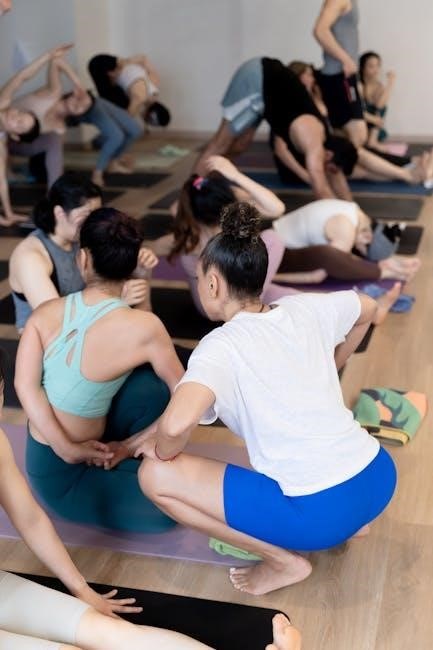
Mindfulness Meditation & the Focus on Breath
Mindfulness meditation fundamentally centers on cultivating present moment awareness, and the breath serves as a readily accessible anchor for this practice. Unlike techniques that actively manipulate the breath, mindfulness encourages observing it as it is – the natural rhythm of inhale and exhale. This non-judgmental observation forms the core of the practice, allowing thoughts and sensations to arise and pass without getting carried away.
The instruction to “exhale,” frequently given by meditation teachers, isn’t about changing the breath, but rather gently returning attention to it when the mind wanders. It’s a subtle reminder to reconnect with the present moment, using the physical sensation of the breath as a grounding point. This simple act of noticing the breath can interrupt cycles of rumination or anxiety.

The breath’s constant presence makes it an ideal focal point, available at all times and in all places. By consistently returning to the breath, practitioners develop a heightened awareness of their internal experience, fostering a sense of calm and equanimity. Therefore, the “exhale” cue embodies a core principle of mindfulness – gentle, non-reactive awareness.
Zen Meditation (Zazen) & Breath Control
Zen meditation, known as Zazen, incorporates a specific approach to breath control, differing from the observational focus of mindfulness. Typically, practitioners are instructed to breathe deeply from the abdomen – a practice called “belly breathing” or dan tien breathing. This diaphragmatic breathing is believed to promote relaxation and stability, both physically and mentally;
While not actively manipulating the breath to achieve a specific state, Zazen emphasizes a natural, even rhythm. The instruction from a teacher to “exhale” often accompanies guidance on maintaining this abdominal breathing pattern. It’s a cue to fully release the breath, allowing the body to settle and the mind to quiet. This complete exhalation is considered crucial for releasing tension.
Unlike techniques focused solely on observing breath, Zazen utilizes breath as a tool for cultivating presence and concentration. The rhythmic breathing supports a stable posture and a focused mind, creating a conducive environment for insight. Therefore, the “exhale” instruction in Zazen isn’t merely about the breath itself, but about deepening the meditative state.
Vipassana Meditation & Observing the Breath
Vipassana, meaning “to see things as they really are,” centers on observing reality without judgment, and the breath serves as a primary anchor for this practice. Unlike Zazen’s emphasis on abdominal breathing, Vipassana encourages simply noticing the natural flow of breath – its length, depth, and sensation. A teacher’s instruction to “exhale” within Vipassana isn’t a directive to change the breath, but rather to bring awareness to the exhalation itself.

The goal is to observe the entire breath cycle – inhalation, exhalation, the pauses in between – as a series of sensations. Practitioners are taught to note these sensations without getting carried away by thoughts or emotions. If the mind wanders, the instruction to return to the breath, often focusing on the exhale, acts as a gentle redirection.
The “exhale” cue functions as a grounding point, a readily available sensation to reconnect with the present moment. It’s a reminder to observe impermanence – the constant arising and passing away of sensations. This detached observation is key to developing insight and liberation in Vipassana, making the simple act of exhaling profoundly significant.
Transcendental Meditation (TM) & Mantras vs. Breath

Transcendental Meditation (TM) distinguishes itself from many other techniques by prioritizing a mantra over conscious breath control. While breath awareness is present initially to settle the mind, the core practice involves silently repeating a personalized mantra. A TM teacher’s instruction will rarely, if ever, include a direct cue like “exhale,” as the focus shifts away from the breath itself.
The rationale behind this approach is to allow the mind to transcend thought, reaching a state of restful alertness. The mantra acts as a vehicle for this transcendence, gently drawing attention inward. Although natural breathing continues, it isn’t actively monitored or manipulated during the practice.
The contrast with breath-focused meditations is significant. Where mindfulness and Vipassana utilize the exhale as an anchor, TM aims to bypass conscious awareness altogether. Therefore, the “exhale” instruction, common in other traditions, doesn’t align with the fundamental principles of TM. The crossword clue’s answer, “EXHALE,” highlights a technique fundamentally different from the TM approach.
Guided Meditation & Teacher Instructions – The “Exhale” Cue
Guided meditations frequently employ the instruction “exhale” as a pivotal element in facilitating relaxation and deepening the meditative state. Teachers utilize this cue to encourage the release of tension, both physical and emotional, with each outward breath. The simplicity of the instruction makes it accessible to beginners, providing a concrete focus for the mind.
Often, the “exhale” is paired with visualizations – imagining stress leaving the body with each breath out. This technique is particularly common in mindfulness-based stress reduction (MBSR) programs and various forms of body scan meditations. The cue isn’t merely about the physical act of breathing; it’s about intentional release.
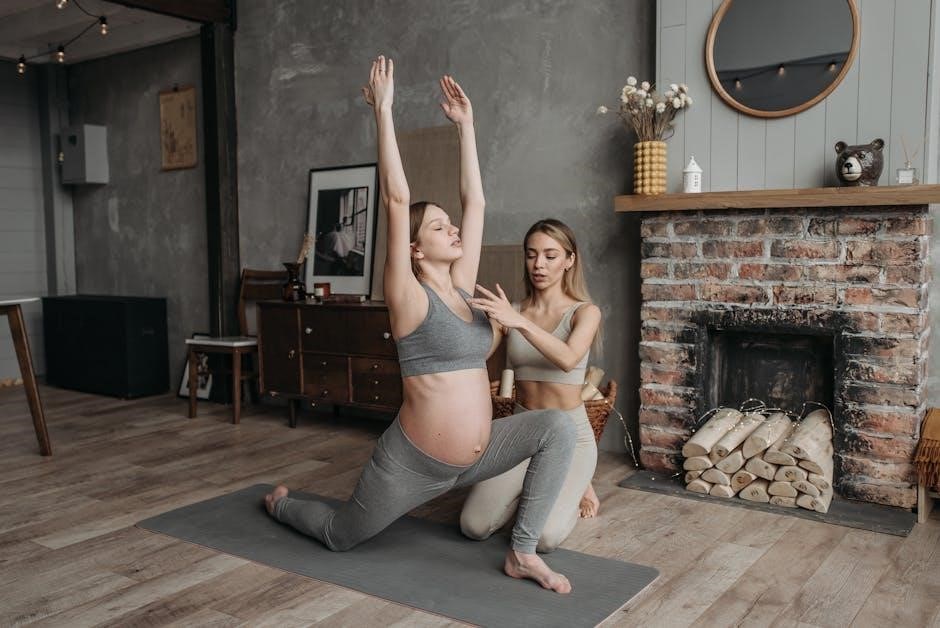
Considering the crossword clue, “Meditation teachers instruction,” the answer “EXHALE” directly reflects this prevalent teaching method. It’s a foundational instruction found across numerous guided meditation scripts and audio recordings. The widespread use of this cue explains its resonance as the solution, representing a common and recognizable element of the meditation experience. The clue taps into this shared understanding of meditative guidance.
The Physiological Effects of Exhalation During Meditation
Physiologically, exhalation triggers a cascade of effects conducive to relaxation, directly supporting the goals of meditation. As we exhale, the parasympathetic nervous system – responsible for the “rest and digest” response – is activated. This leads to a decrease in heart rate, lowered blood pressure, and reduced levels of cortisol, the stress hormone.
The act of prolonged or deepened exhalation, often instructed during meditation, further enhances these effects. It stimulates the vagus nerve, a key component of the parasympathetic system, promoting a sense of calm and well-being. This physiological shift explains why focusing on the exhale is so effective in mitigating anxiety and promoting emotional regulation.
Relating back to the “Meditation teachers instruction” crossword clue and its answer, “EXHALE,” the clue highlights a practice rooted in tangible biological benefits. Teachers emphasize exhalation not just for its mental focus, but for its demonstrable impact on the body’s stress response. The clue’s solution, therefore, represents a scientifically-supported technique for achieving a meditative state.
Resources for Solving Crossword Puzzles (General Strategies)
Navigating crossword puzzles, like the one featuring the “Meditation teachers instruction” clue, requires a blend of knowledge and strategy. Online resources are invaluable; websites like Crossword Solver and the New York Times Crossword app offer clue databases and solving tools. Utilizing these can reveal common answers and patterns.
For challenging clues, consider letter counts and potential word families. The “EXHALE” solution, with its six letters, fits a common crossword length. Breaking down the clue into keywords – “meditation,” “teachers,” “instruction” – can spark associations. Don’t hesitate to use a thesaurus to explore synonyms.
Furthermore, recognizing crosswordese – frequently used, obscure words – is beneficial. Community forums and social media groups dedicated to crosswords provide collaborative solving opportunities. Finally, remember that persistence is key; tackling puzzles regularly sharpens your skills and expands your vocabulary, making clues like this one more accessible.
Future Trends in Crossword Clue Design & Meditation Themes
Crossword clue design is evolving, with a growing trend towards more conceptual and thematic puzzles. We can anticipate increased integration of wellness topics, including meditation, reflecting its rising cultural prominence. Clues may move beyond simple definitions to incorporate the experience of meditation, rather than just its instruction.
Expect to see clues referencing specific meditation techniques – Vipassana, Zen, or Transcendental – demanding a deeper understanding than simply knowing “EXHALE.” Puzzle creators might employ meta-clues, requiring solvers to consider the broader context of mindfulness. Interactive digital crosswords could even incorporate audio cues, like guided meditation snippets.
The “Meditation teachers instruction” clue itself signals this shift. It’s not a direct definition but a contextual prompt. Future puzzles may explore the physiological effects of meditation, or the history of mindfulness practices, creating a more enriching and intellectually stimulating experience for solvers. This trend promises a more mindful approach to puzzle creation.